Offgrid Expedition
A dynamic adventure tour company
Project overview
Offgrid Expedition: A dynamic adventure tour company
Offgrid Expeditions is a Travelling and camping website With a profound commitment to loving, enjoying, and preserving nature, this website introduces a unique camping experience where users can effortlessly book their next expedition.
As a member of the experience design team, my role involved simplifying the booking process to ensure that users can complete their tasks in an efficient way.
Team: Product Managers, Dev Team, UX design Team
Role: UX Designer
Timeline: January 2022 - August 2022
Goal: Desktop and mobile
Design Thinking Loop followed in this project
Understand the business context and users through empathy to get closer to solving business problems than only improving product
Observe
Restless reinvention through brainstorming and valuing all the ideas. Visualizing ideas was the main tool in this stage
Make
Put the best idea into real life and seek feedback to improve the final product
Reflect
Observe
Business problem
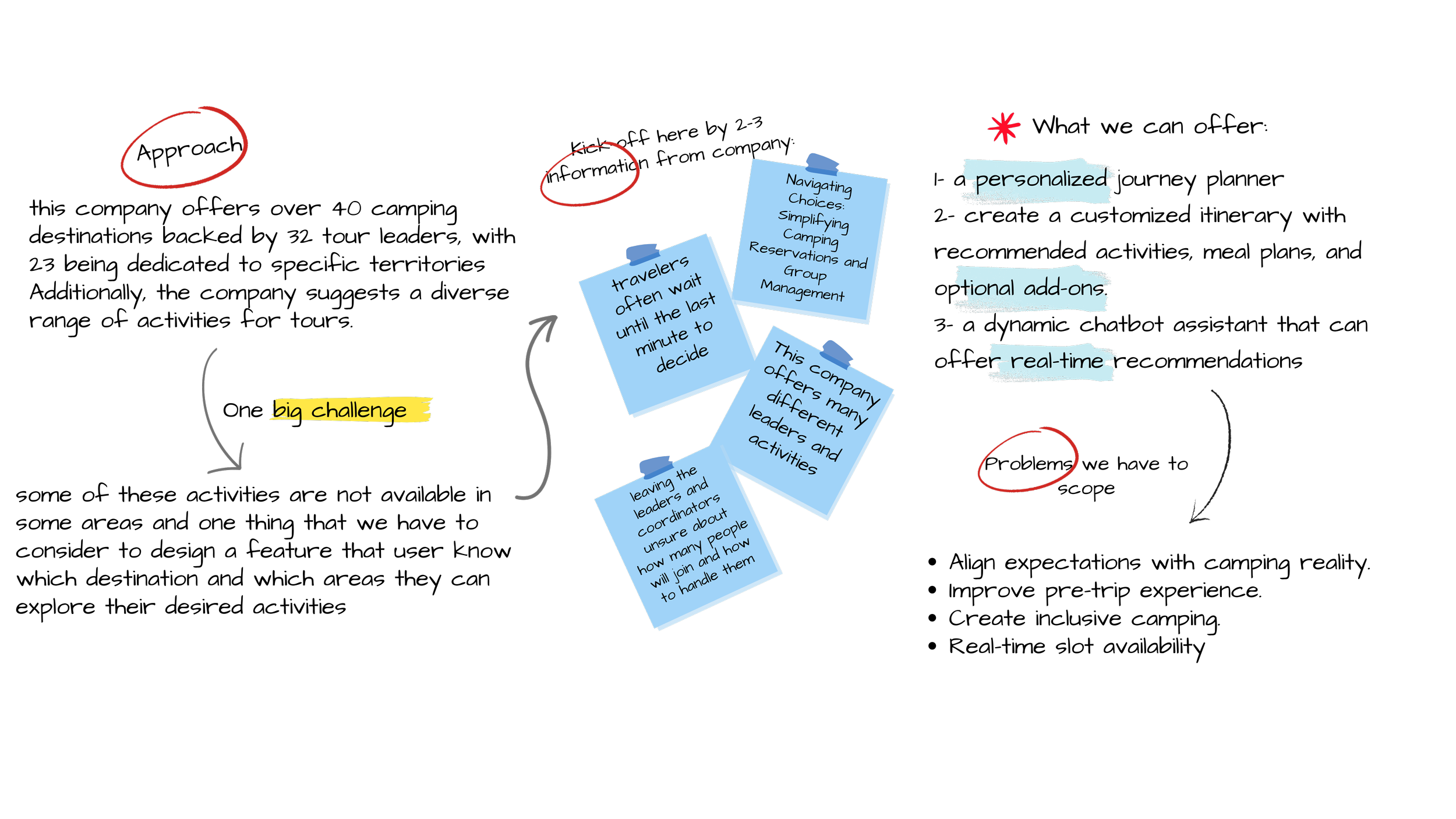
How can we present and organize a diverse range of camping tours across various locations and business services?
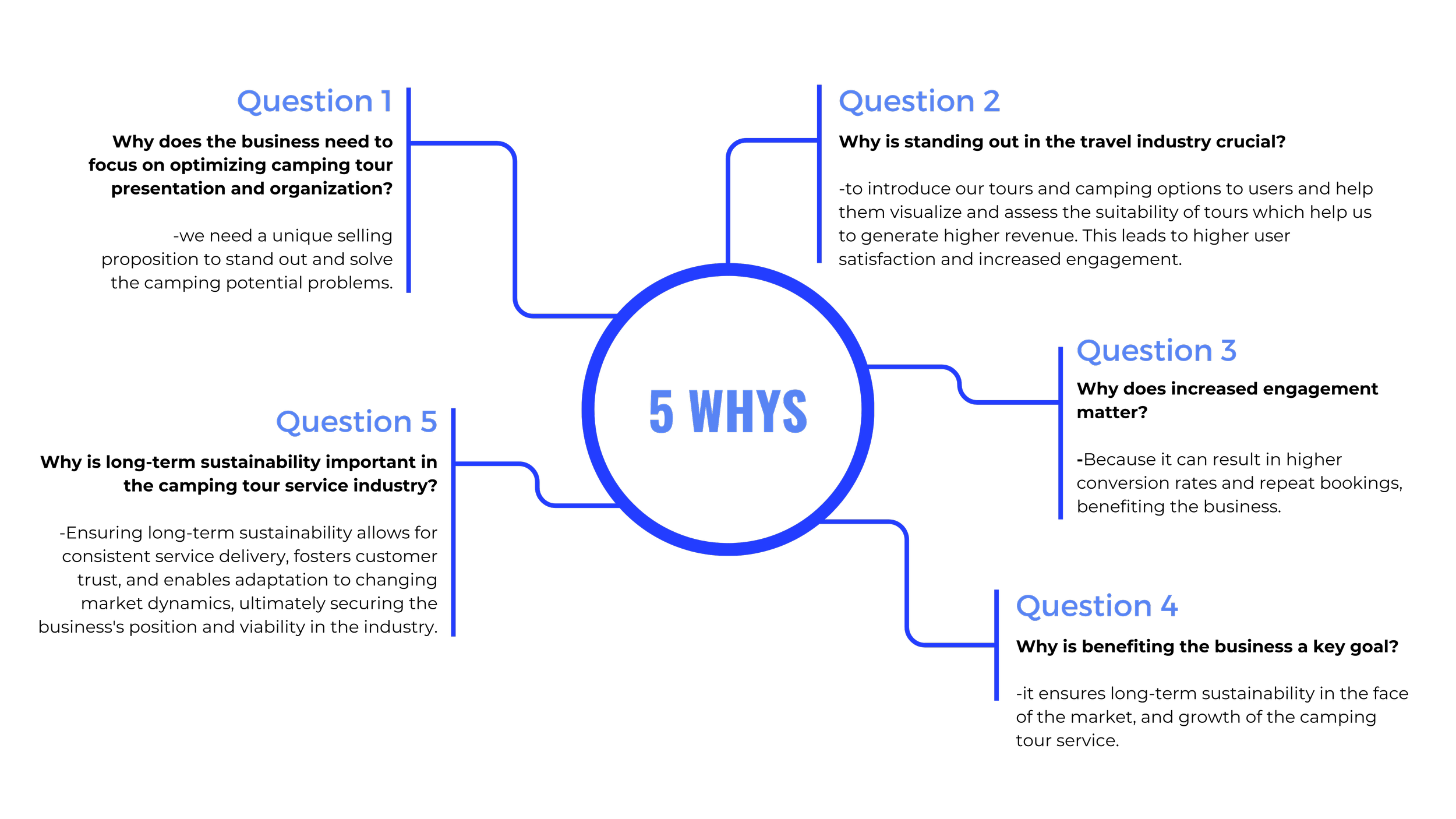
The user-centered problem after 5 whys
“How can we create a platform that shields users from potential camping market issues, while motivating them to explore a variety of destinations, thereby fostering greater satisfaction and encouraging repeat bookings?”
Current situation to an improved future experience
The primary design goal was to create a unified platform that consolidates all tour-related information, allowing users to access what they need quickly and efficiently. The experience was designed to help travelers clearly envision destinations and planned activities through engaging and informative content, supporting confident decision-making. A key priority was also to reassure users about their safety by directly addressing prevalent concerns within the camping and travel market. Finally, the platform was intentionally structured to encourage innovation and foster deeper user engagement, enabling more meaningful interactions between travelers and the service over time.
As is
Unorganized camping tours that their users and offer them available options through social media channels and groups
To be
Organized all the key information such as destination, leaders, and services so that users can access any detail in some clicks without confusion
Challenges
To tackle this, we diligently gathered and synthesized data, developing a deep understanding of our users' needs, preferences, and how best to present the information.

Before starting we needed to embrace the unknown so we gathered and start brainstorming our hypothesis:
Define
What are the most important factors that users want to know before reserving a camping tour?
“Users often plan trips with others, such as friends or family, which can make sharing information and making booking decisions challenging. Providing an option that helps groups communicate and consolidate details more easily could improve the booking experience.”
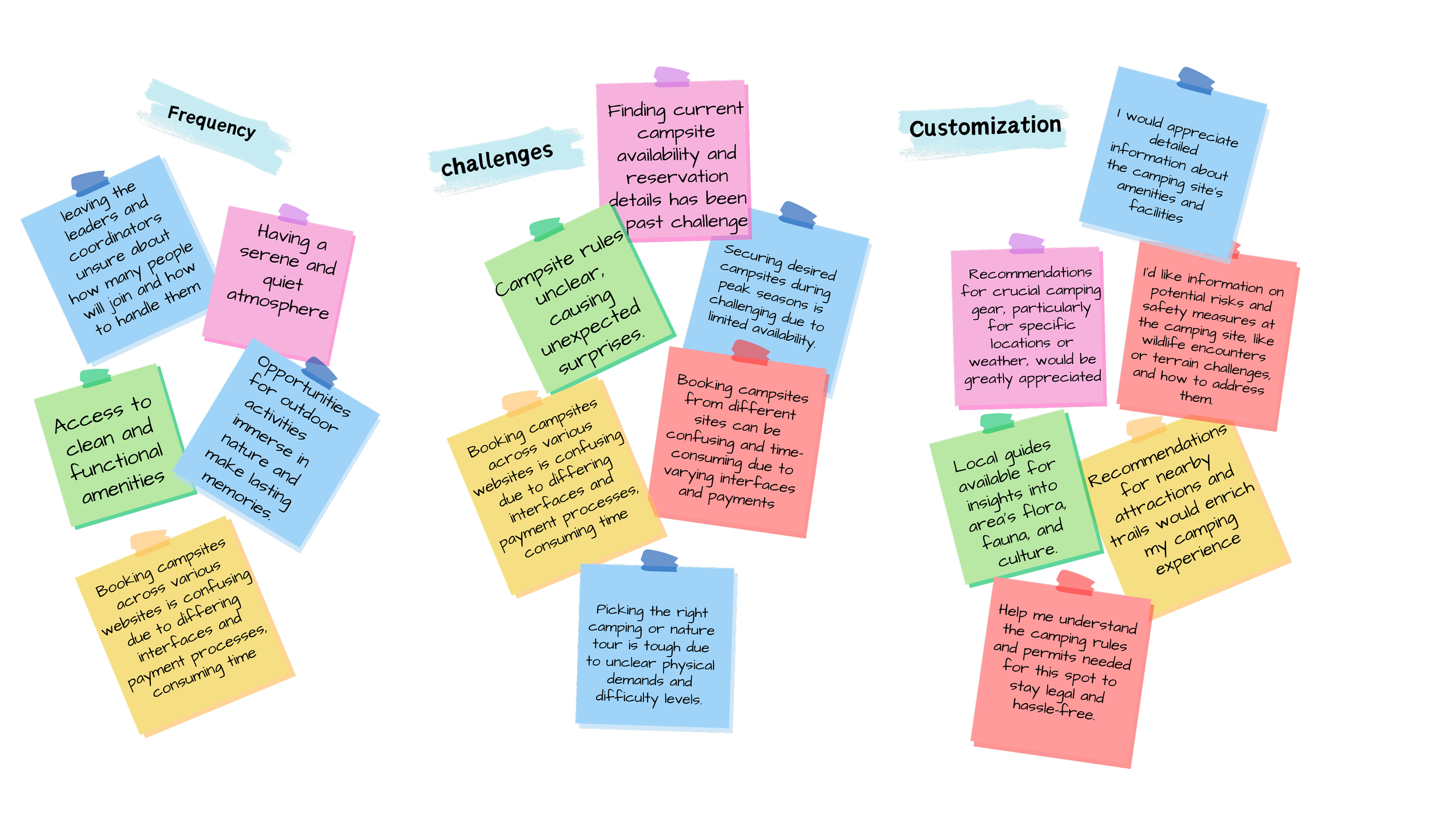
One dominant method that we used in our research was interviewing with possible users by translating objectives into actual questions to ask. We grouped similar research findings in an affinity map to reveal common themes.
Research
Develop
User flow
To fully understand exactly what we have to build based on research findings we designed user flow and for the best ideas then revised them to reach the following user flow:
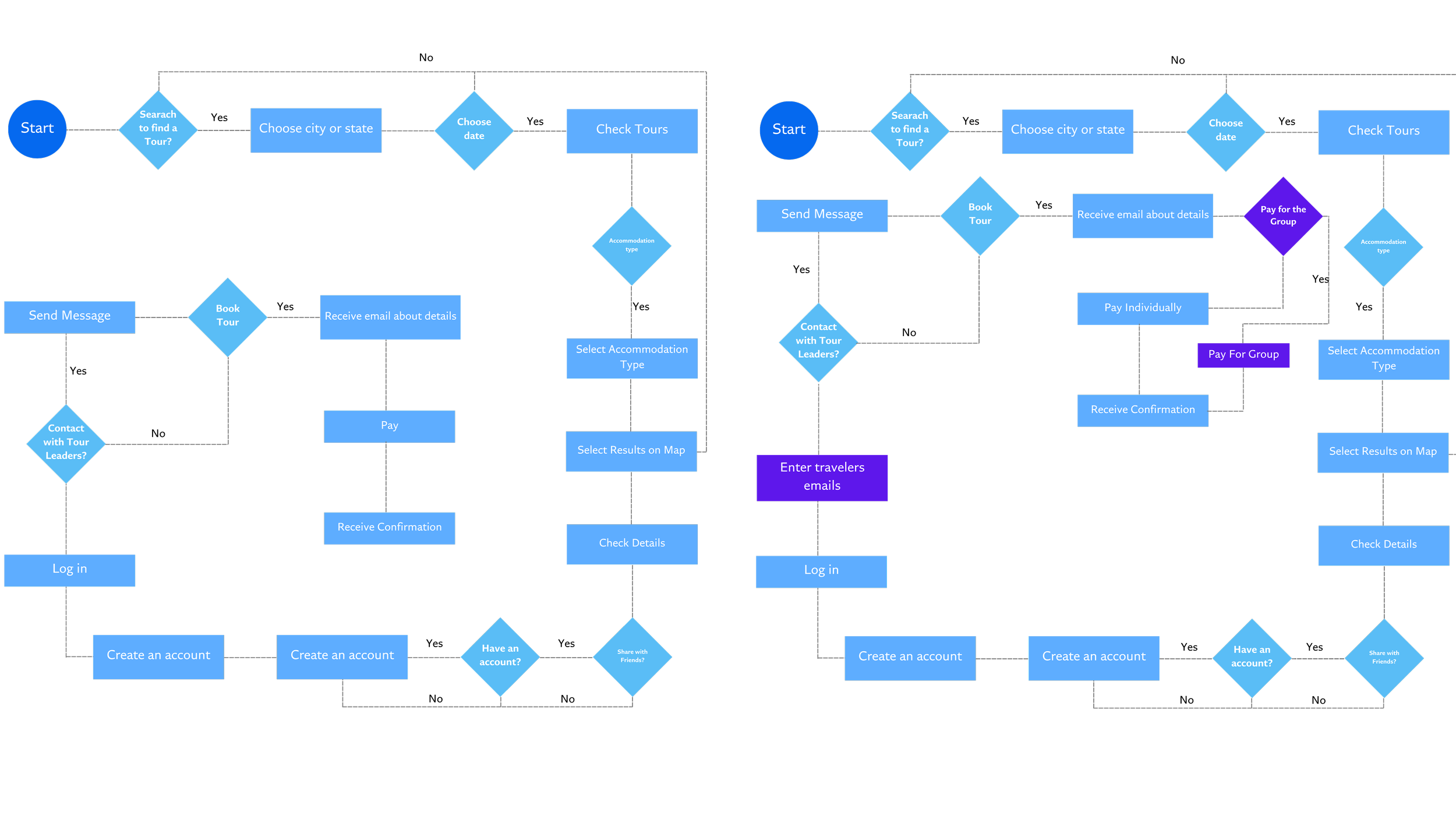
Final user flow
Solutions
Group Payment Options
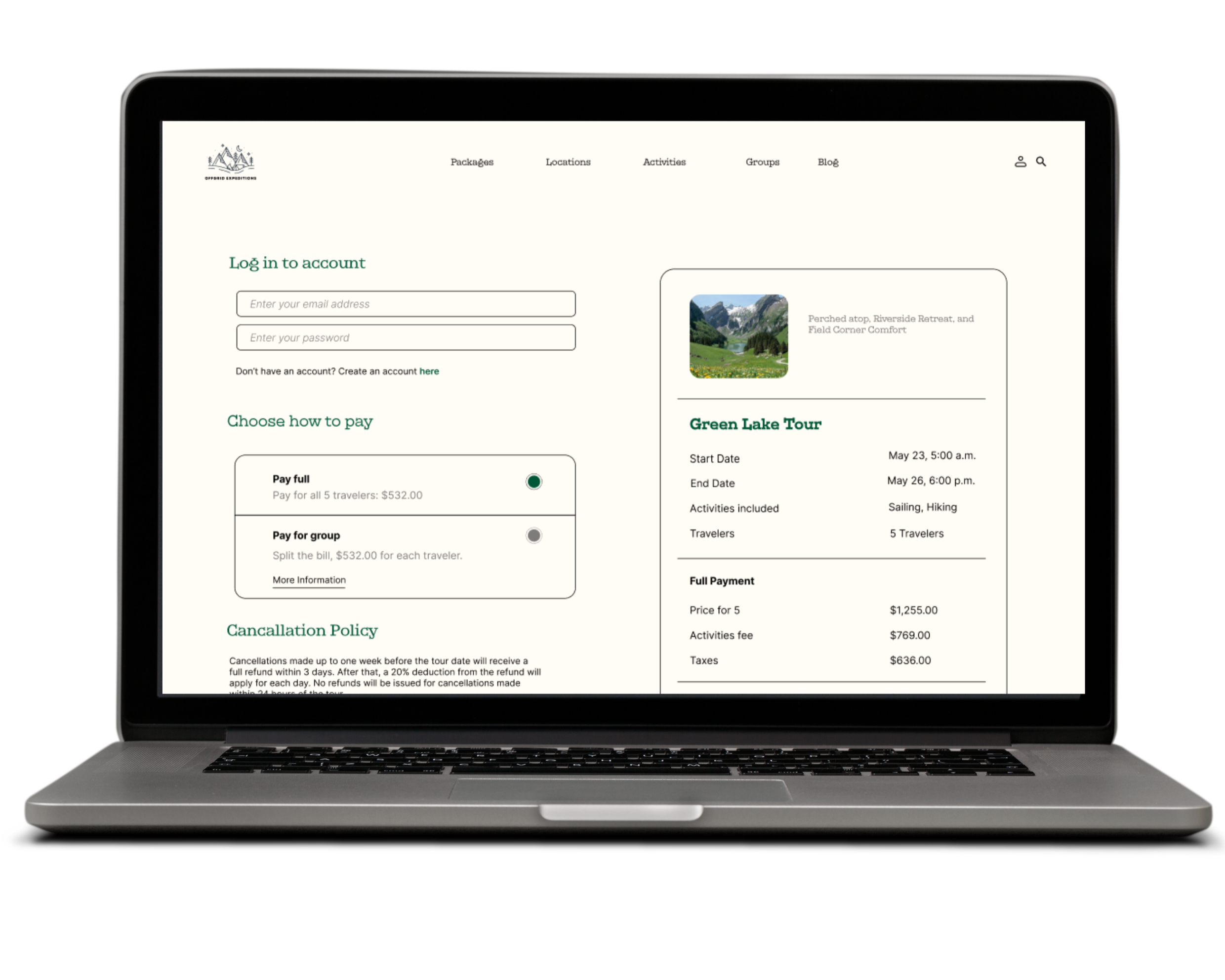
To enhance the booking experience, we introduced two flexible group payment options for our users:
Organizer Pays the Full Amount: The group organizer can pay the entire price upfront.
Individual Payment: Each traveler can pay their own portion directly, with the option to send the bill to other group members.
Group Payment Continuation
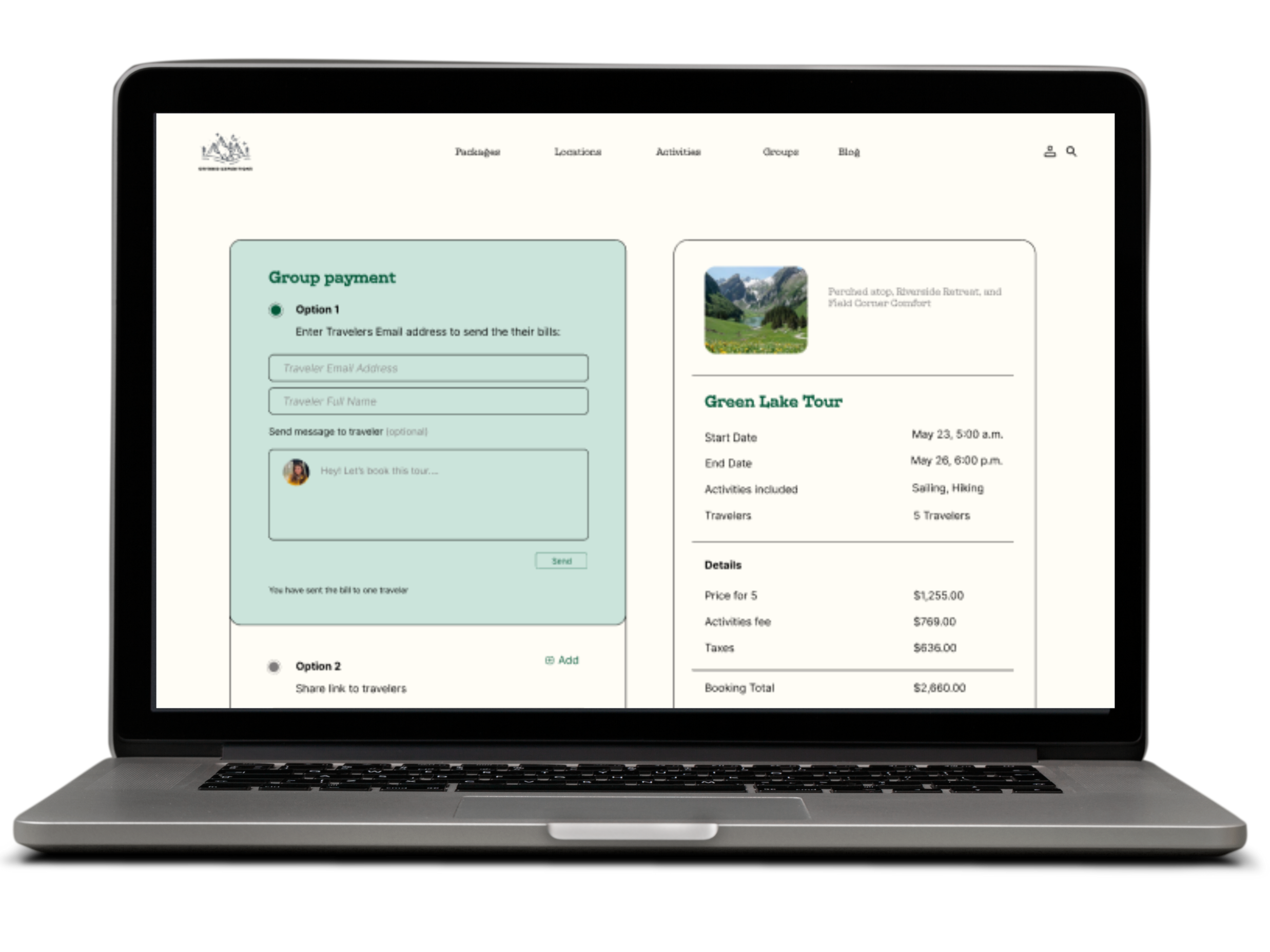
After selecting the group payment option, users are presented with two paths to proceed:
Direct Billing to Travelers: If the organizer opts to have the platform send bills directly to each traveler, they are prompted to enter the email addresses of all group members. The platform requires the organizer to input the exact number of email addresses corresponding to the number of travelers previously specified.
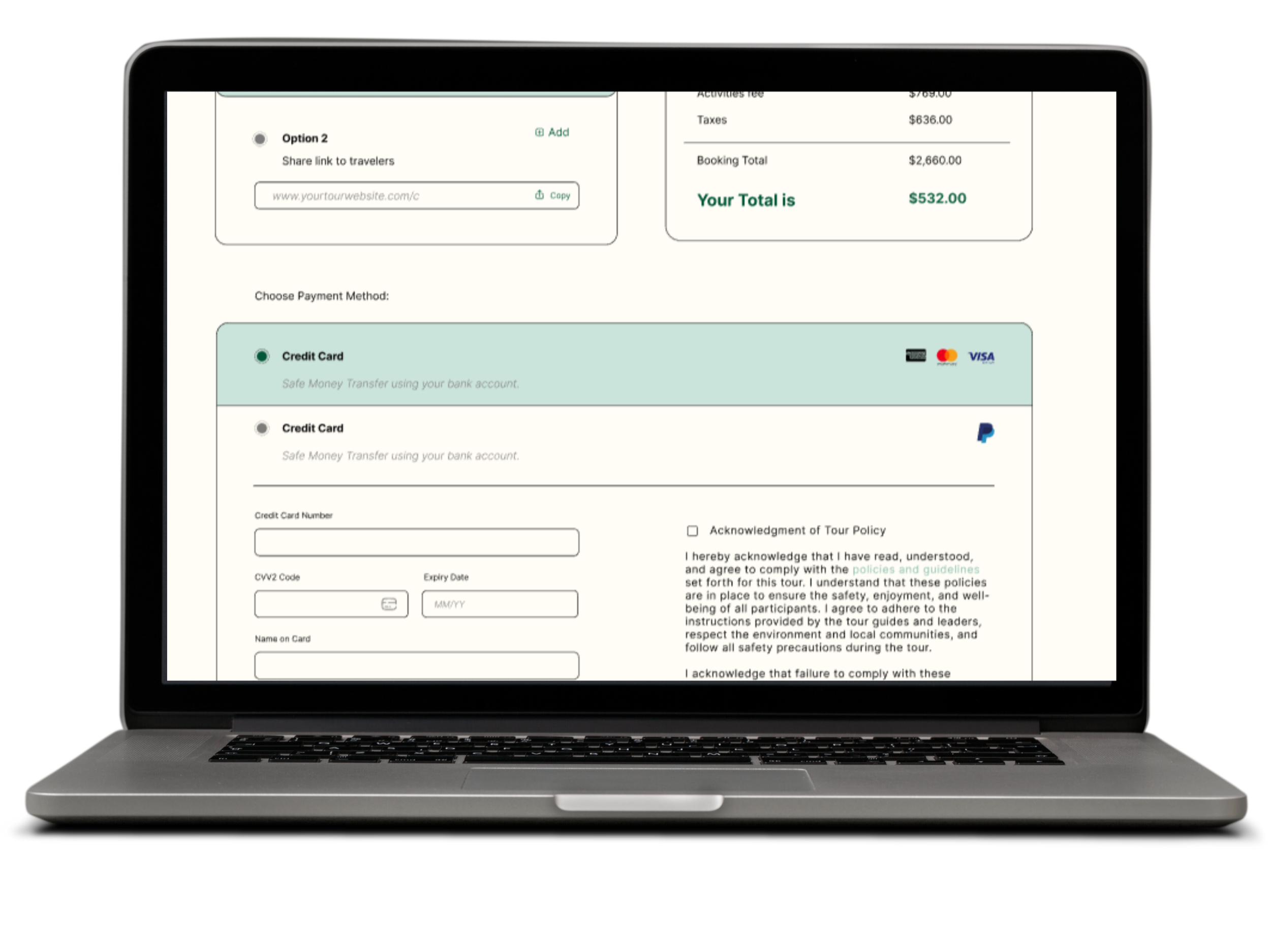
For users who prefer not to provide email addresses or do not have all travelers' email details, we introduced an alternative method:
Copy Link Option: Users can opt to generate a unique payment link that they can share directly with travelers. This link allows each traveler to access the payment page independently.
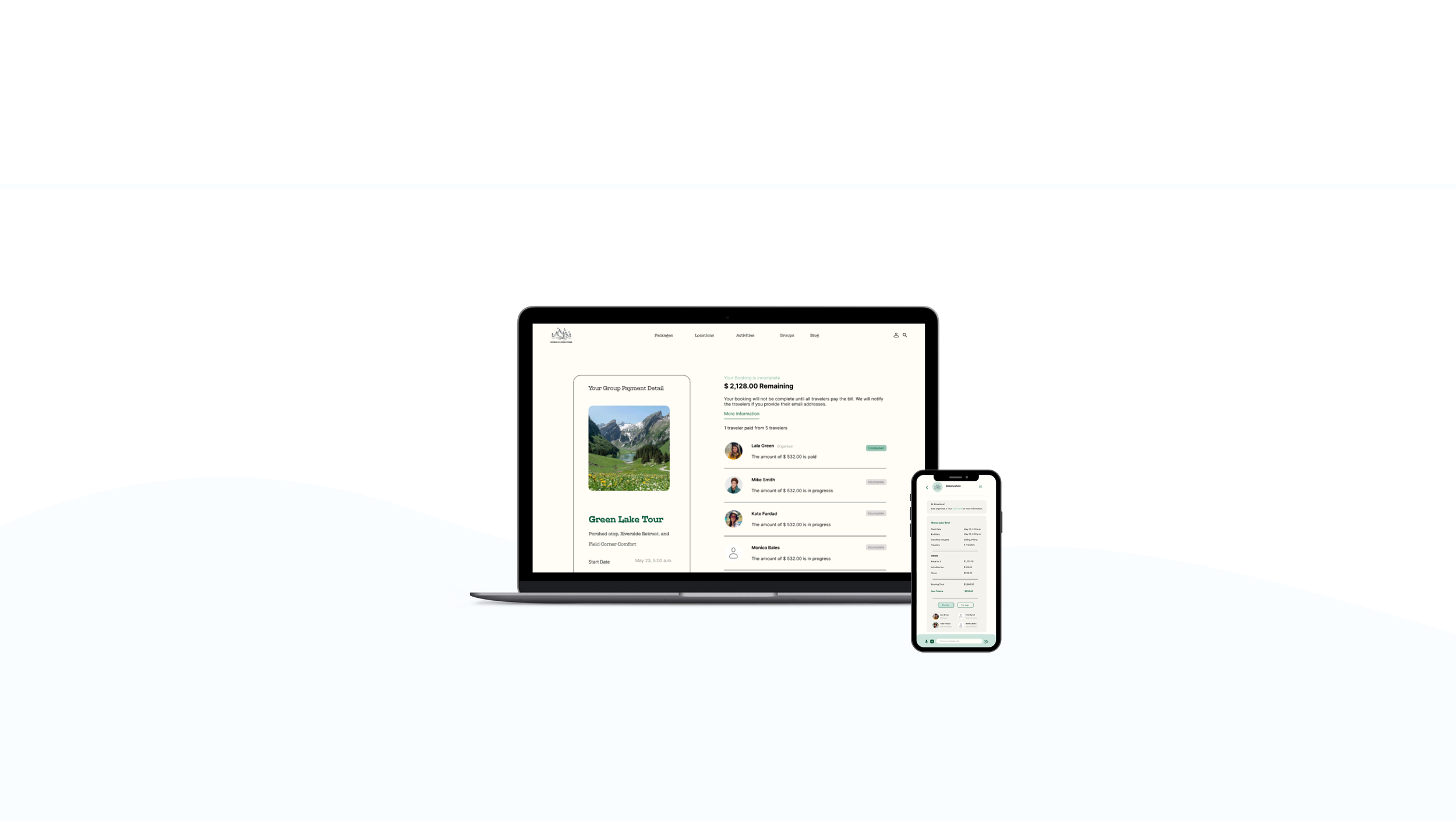
Group Payment Management
To enhance transparency and flexibility, we provided users with access to a Group Payment Management dashboard. Here, users can monitor who has completed their payment, with full details of the tour and each traveler’s contribution.
Additionally, users have the option to make additional payments beyond their portion. If other travelers are unable to complete their payments, the organizer or any group member can click on "Make Another Payment" to cover the outstanding amount, ensuring the booking is finalized without delay. This feature adds a layer of convenience and ensures that group bookings can be secured efficiently.